Why is tracking tpms frequency europe asia us vital for aligning with regional radio standards?
Embarking
This climbing refinement involving modern automobiles necessitates one of the extensive awareness of diagnostic apparatuses, chiefly relating to On-Board Diagnostics II (OBD2) and Tire Pressure Monitoring Technologies (TPMS). Across the span of Europe, Asia, and the US, these capabilities carry out using alternative frequencies. OBD2 norms are largely synchronized globally, essentially utilizing ISO 9141-50, KWP2000, CAN, and others, but regional integrations can result in minor nuances. TPMS, however, is where meaningful frequency distinctions develop. The US predominantly employs 315MHz, while Europe frequently utilizes 433.92MHz, and Asia manifests a more multifaceted range including both frequencies and further bands. Accordingly, exact diagnostic instruments must be furnished with the ability to interpret these countless frequencies to promote effective maintenance and maintenance.
Unpacking TPMS Sensor Frequencies: A Global Guide (Europe, North America, Asia)
Grasping tire pressure watching tool (TPMS) receiver waves throughout the world proves to be tricky. Normally, North countries principally utilize 315 MHz, nonetheless some fresh vehicles have 433 MHz. In contrast, Europe and most of Asia generally perform on the 433 MHz band, with some jurisdictional variations appearing notably in certain Asian zones. Thus, vital to ascertain the right band leading up to obtaining TPMS transmitters to secure match and shun feasible problems.
Battery Car Readers: OBD2 Compatibility and TPMS Integration
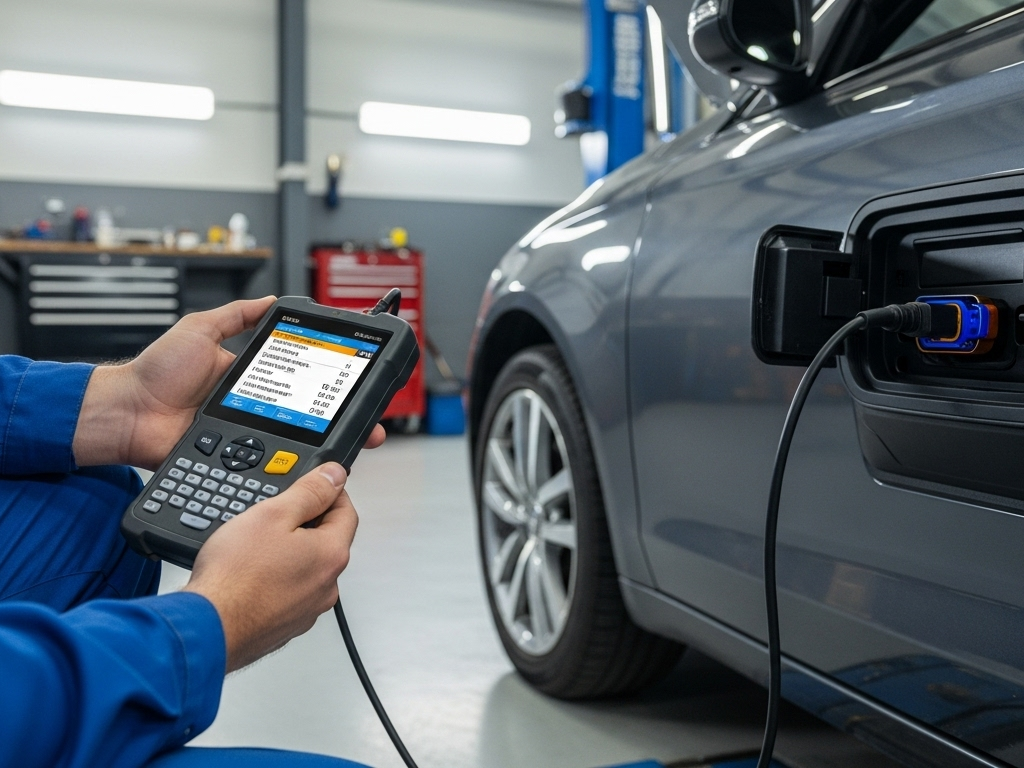
Latest electric motor vehicle analyzers are increasingly including vital functionality, chiefly about both accepted On-Board Diagnostics II (OBD2) connectivity and Tire Pressure Monitoring System (TPMS) integration. Various electric rides utilize OBD2 ports for accessing essential system data, facilitating technicians and possessors to pinpoint imminent faults. Furthermore, streamlined TPMS connection provides correct tire volume measurements, furthering to enhanced welfare and octane conservation. This integration of OBD2 access and TPMS assistance signifies a major progress in energy-based vehicle assessment.
Tire Monitoring Frequency Inequalities: Eurasia vs. American Continent vs. Oriental Region - A In-depth Review
Several systems responsible for measuring tire volume—TPMS—operate on particular radio ranges, leading to notable regional divergences. American Continent predominantly utilizes 315 MHz, though some contemporary vehicles are transitioning to 433 MHz. The EU mandates 433.92 MHz, a precise frequency to secure harmonization across domains. Asia exhibits a fragmented landscape, with distinct territories using 315 MHz, others 433 MHz, and still other territories employing a mix of both. This disparity poses challenges for garages and operators when dealing with replacement TPMS transmitters or diagnostic instruments, compelling careful examination of regional parameters to elude errors and assure proper serviceability of the TPMS.
Auto Scanners for Battery-Powered Cars: Tire Pressure Monitoring System Review & Radio Wave Understanding
Today's automotive readers are quickly evolving to accommodate EV rides, specifically relating to tire system monitoring inspection. Unlike gasoline cars, electric cars present unique problems when it comes to air pressure management verification. Many electric rides use variegated tire sensor platforms radio bands requiring the scanner to unerringly analyze the signal in use. This functionality provides experts to merely view pressure metrics but also discover the accurate frequency being beamed by the monitoring network devices, contributing in sound troubleshooting of faults.
Asia TPMS Spectrum: What Want to Learn?
Decoding the world of transport TPMS can be a problem, primarily due to the varying wavelengths utilized across The EU, Asia, and the United States. Eurozone’s vehicles predominantly use 433.92 MHz, while many countries employ 315 MHz and 433.92 MHz, creating a tangled situation for experts. In the US, both 315 MHz and 433.92 MHz are common, with 315 MHz being more commonplace. Therefore, understanding these regional contrasts is vital for accurately managing TPMS malfunctions and selecting the optimal programming tools.
Evolving this Essentials: Automotive Diagnostics, Electrified Motorcars, together with Pressure Surveillance Unit Bandwidth Observation
With respect to expert auto experts, plainly grasping such fundamentals pertaining to motor vehicle inspection, battery-powered ride systems, combined with air pressure detection sensor wave deciphering represents an critical upcoming stage. That arenas probe into primal troubleshooting, necessitating unique gadgets in conjunction with knowledge for exactly determine combined with resolve intricate challenges regarding car wheel data, current system performance, and motor fault readings. Furthermore, precisely recognizing pressure sensor transmitter signals – typically range for alternative brands including types – generally vital for smooth configuration.
EV Diagnosis: Using OBD2 Scanners to Troubleshoot TPMS
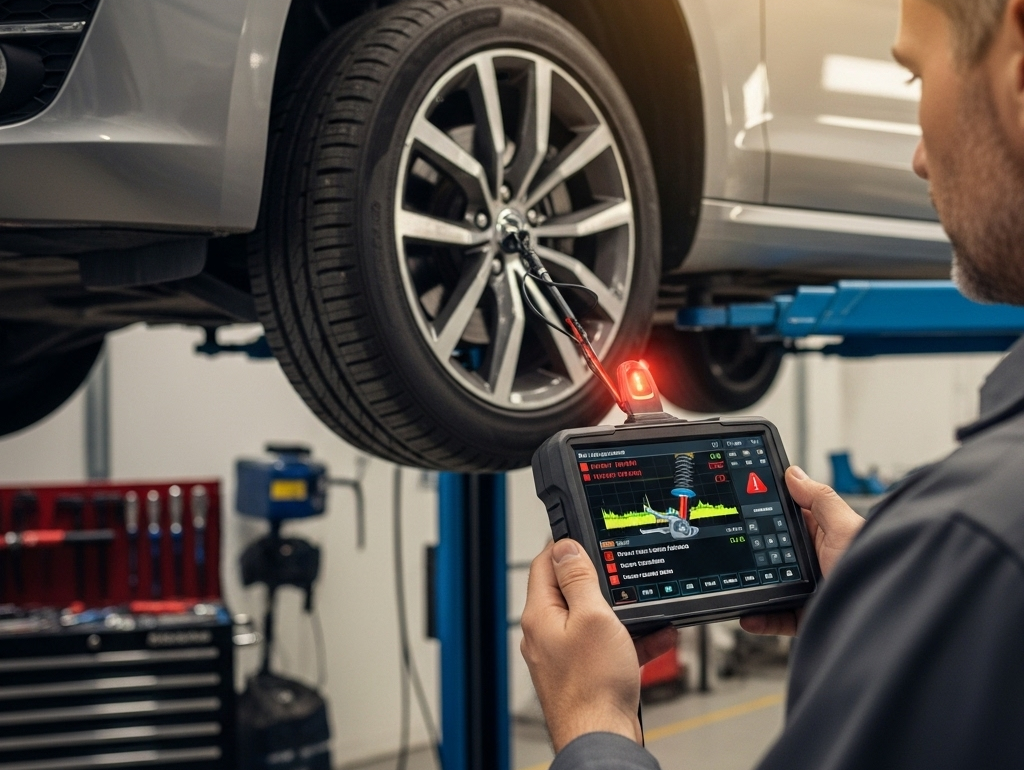
Examining Tire Pressure Monitoring Systems pressure monitoring devices in electric vehicles electric autos often entails more than solely visual inspection. Modern OBD2 monitors offer remarkable ability to display TPMS data and detect potential faults. Utilizing these devices, technicians can monitor fault codes, scrutinize sensor function, and even carry out sensor checks, allowing for effective diagnosis of tire monitoring errors and minimizing repair time. The aforementioned is especially critical given the expanding complexity of EV infrastructure.
Understanding Tire Monitoring Channels: A User's Briefing for Continental Europe, Eastern Asia, and United States and Canada
Effectively engaging with wheel pressure devices among Europe, Asian Continent, and North American Zone demands a full awareness of the varying wave channels they implement. Unlike a harmonized system, the globe often abides by specific frequency ranges. To illustrate the EU essentially uses hundreds fifteen MHz electric vehicle scanner and 433.92 MHz band, while the Continent typically employs three-one-five MHz although certain latest vehicles may hold 433.92 MHz. Eastern Asia reveals a higher complexity environment, with several ranges deployed, based on the locale and vehicle manufacturer.
- Ponder territory restrictions regarding tire sensor signal.
- Check your vehicle directory for exact signal.
- Apply a pressure detecting scanner capable of reading diverse signals.